
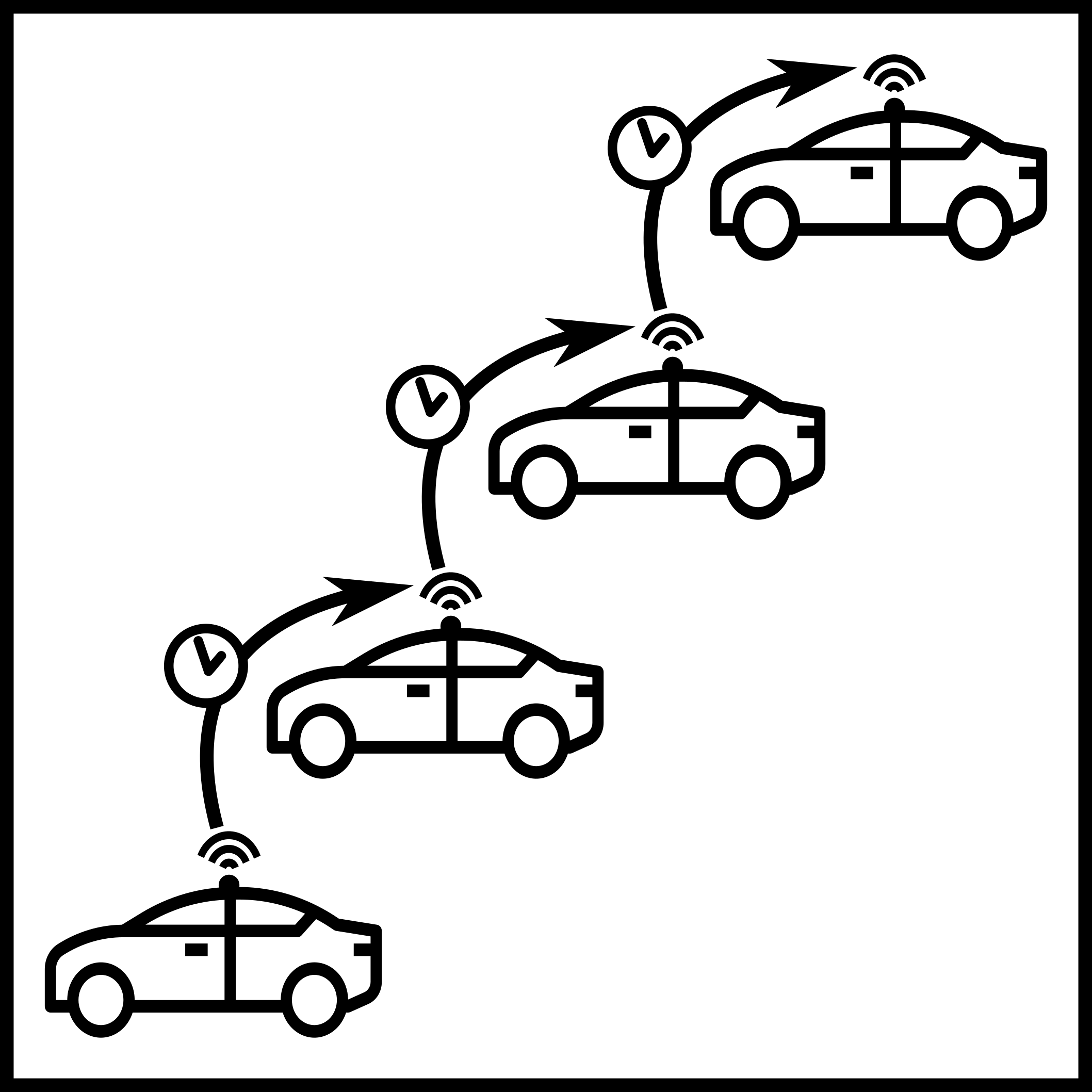
As machines are increasingly networked and communicate over large distances, scarce on-board resources motivate implementation of controllers `in the cloud,’ introducing serious challenges due to communication delays, which can introduce chatter that degrades performance, or even cause unexpected instabilities and catastrophic failures. While a single delay renders a linear time-invariant system infinite dimensional, time-varying delays in nonlinear systems are even more mathematically complex.
Image
| Image

| Image

| Image

|

Our early work indicated that input-output stability theory could provide an ideal framework for understanding and compensating for the uncertainty from delays. This is because dissipativity theory allows us to strategically group delays with the best-understood elements to facilitate analysis and design. However, the traditional dissipativity approach is conservative with realistic communication delays, which vary randomly about an average value. Advances in stochastic dissipativity rekindled hope in that direction, but none were suited for systems stochastic delays, so we developed a new concept of stochastic dissipativity, including a stability theorem and identification criteria.
